Designing a Verification Platform That Adapts to Markets, Borrowers, and Talent
SUMMARY
I led the design stabilization and evolution of nCino’s Verifications platform during a major backend and frontend rewrite. Stepping in mid-stream after scope and leadership changes, I redesigned complex multi-borrower workflows and introduced flexible dual-vendor strategies, enabling lenders to optimize for speed in high-volume markets and cost control in down markets. The work drove a 7% lift in verification conversion from a vendor switch ($47K in incremental revenue), reduced unnecessary verification spend, and enabled scalable support for modern co-buyer and co-signer scenarios.
UI/UX Design
Complex Workflows
Research Synthesis
User Interviews
User Journeys
Market Analysis
Enterprise SaaS
Cross Team Alignment
FINAL DESIGNS
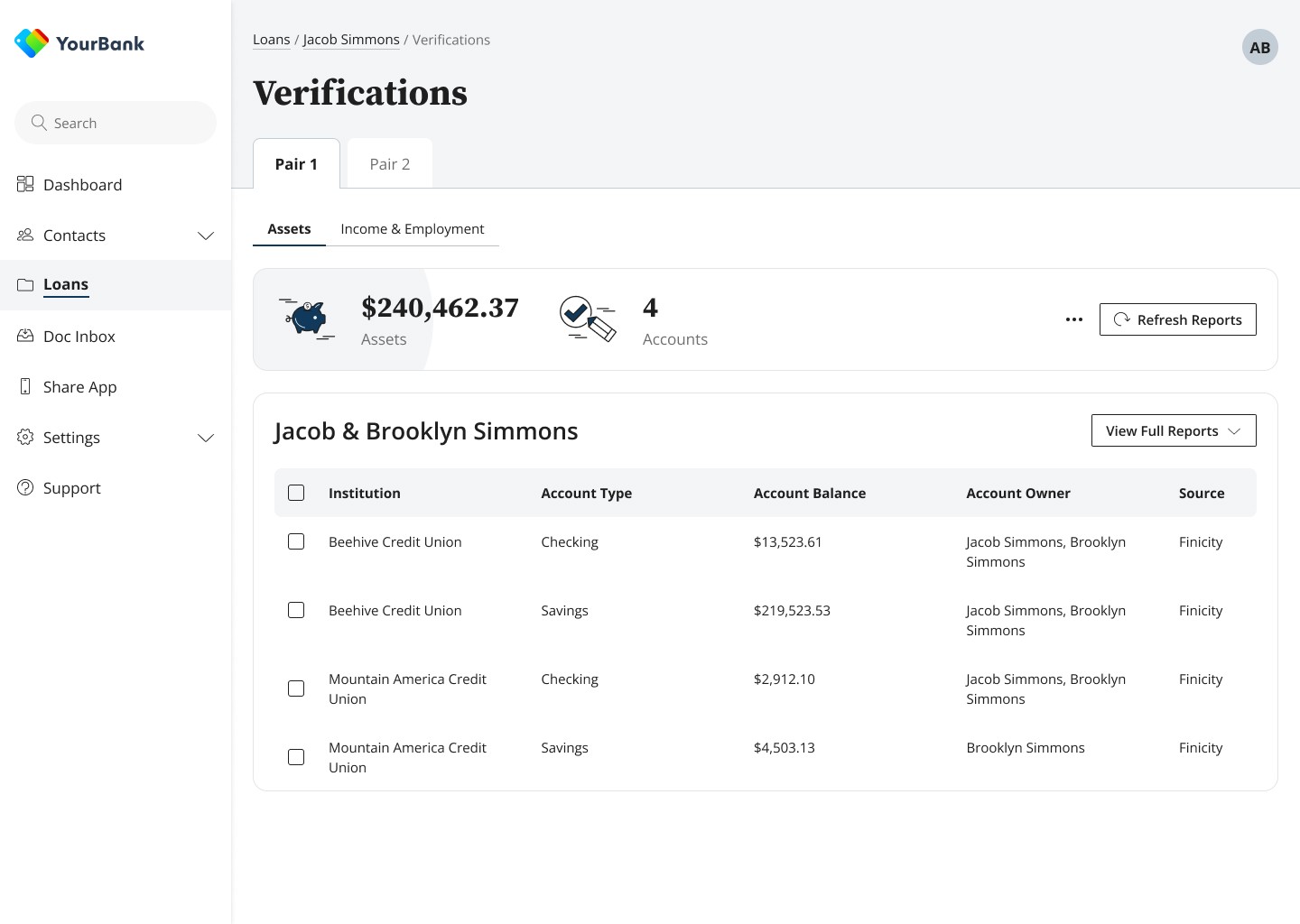
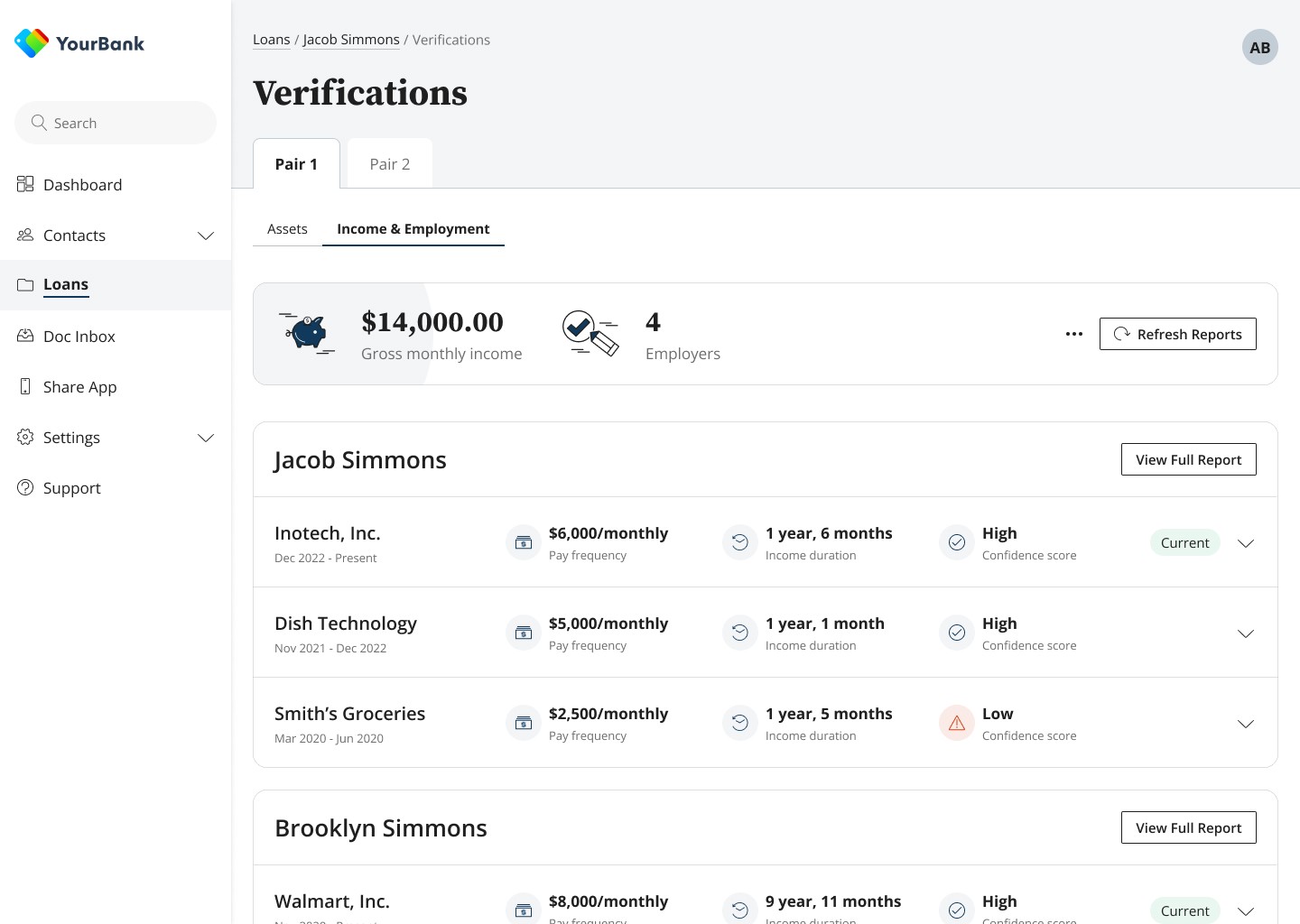
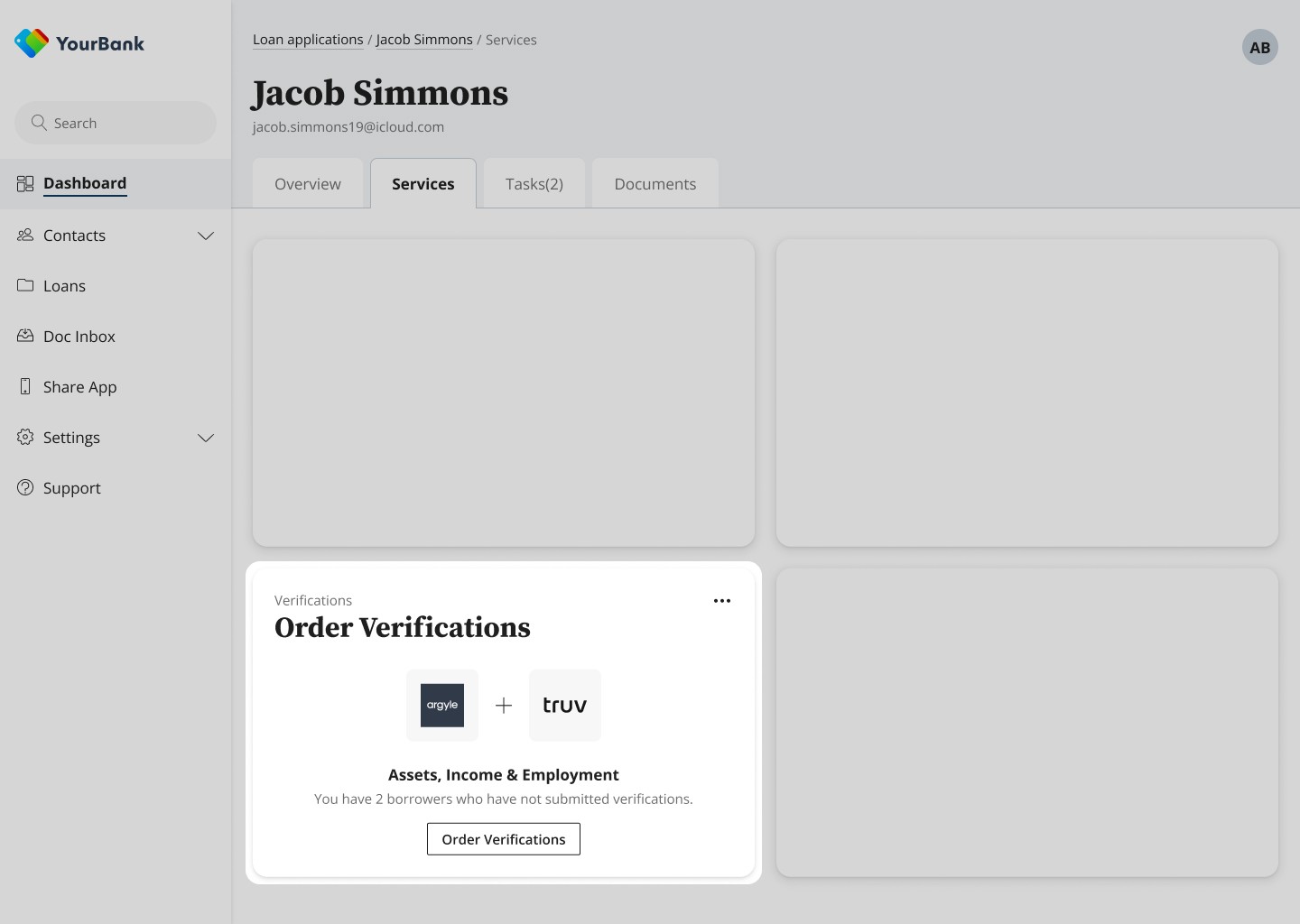
WHAT ARE VERIFICATIONS?
During the home-buying process, verifications validate a borrower’s assets, income, and employment so lenders can approve and fund loans.
CONTEXT
Welcome to nCino: Inheriting a Major Redesign in Motion
When I joined nCino, the Verifications redesign had already been in progress for over eight months and involved a major backend and frontend rewrite. The original designer had recently transitioned to another business unit, and while the initial designs were strong, the project scope had evolved significantly as development progressed.
New business needs emerged which introduced cross-team dependencies and required rethinking core workflows. At the same time, the Product Manager role transitioned, creating pressure to deliver while onboarding new leadership and design perspective mid-stream.
My role was to help stabilize the project, adapt the design to shifting requirements, and ensure the final experience could scale with both technical and business realities.
RESEARCH & INSIGHTS
Shifts in Borrower Structure and Lending Economics
40
years old is now the average first-time home buyer age
46%
increase in unmarried couples buying homes together
2x
more loans involve older co-signer, usually a parent
These trends, older first-time buyers, more unmarried co-buyers, and increased parental co-signing, reflect broader cultural shifts in household formation and buying patterns as younger buyers face higher housing costs, tighter credit standards, and mounting student debt.
In high volume markets, speed is revenue
Lenders optimize for:
Speed to underwrite
Speed to close
Loan officer throughput
They are willing to:
Pay more per verification
Use higher-cost, higher-coverage vendors
Reduce fallbacks and manual touch points
In down markets, efficiency is survival
Lenders optimize for:
Cost control
Margin preservation
Reduced waste on loans that won’t close
They want to:
Choose the cheapest viable verification path
Tune vendors by borrower profile
Avoid paying premium costs on early-stage fallout
Lenders needed the ability to optimize verification strategy by market conditions, prioritizing speed and coverage in high-volume environments and cost efficiency in down markets.
USER JOURNEY
Loan app → Loan Officer Dashboard → Loan Origination System
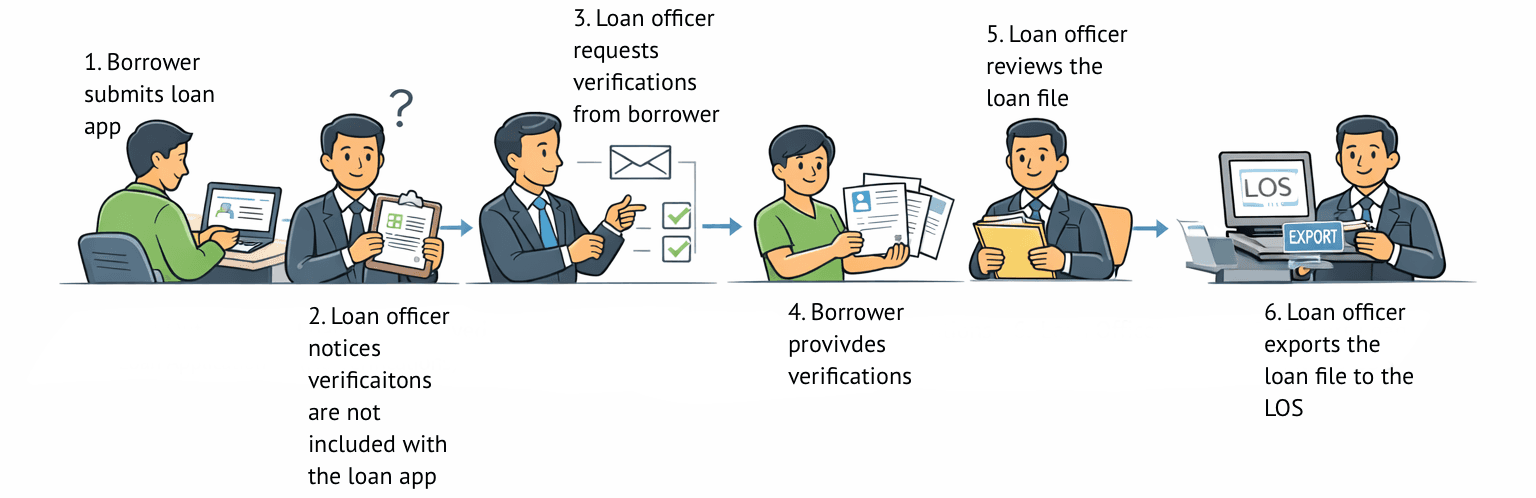
To reduce friction and increase completion rates, borrowers typically submit a streamlined loan application that excludes verifications, either by design or because optional steps are skipped to apply quickly. The loan officer receives this lightweight application and then initiates a separate request for required verifications—such as assets, income, and employment—at the appropriate point in the workflow. The borrower submits these verifications asynchronously, allowing the loan officer to review them alongside the application, validate the borrower’s financial profile, and resolve any gaps. Once the loan is verification-complete, the loan officer exports the file into the loan origination system (LOS) to move it confidently into underwriting and toward closing.
SOLUTION
Modernizing Verifications for Flexible Vendor Strategies and Multi-Borrower Loans
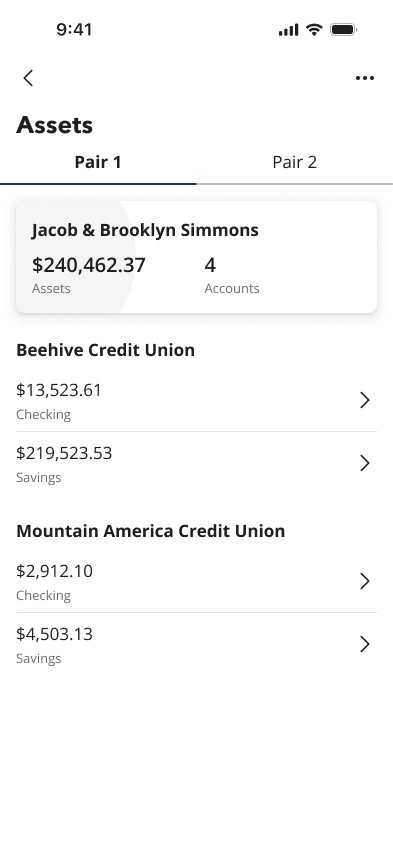
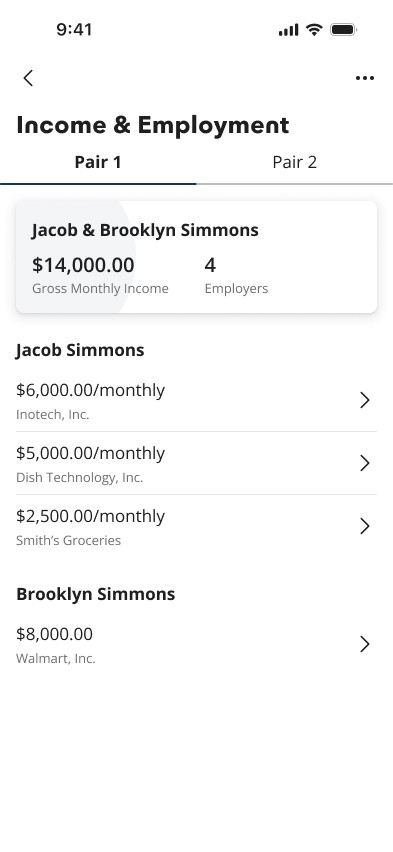
We redesigned the verifications platform to support dual vendor integrations for assets and employment, giving lenders flexibility to adapt to changing market conditions, while enabling multi-borrower workflows to reflect modern household formation and buying patterns.

KEY DESIGN DECISIONS
A’ la carte verifications
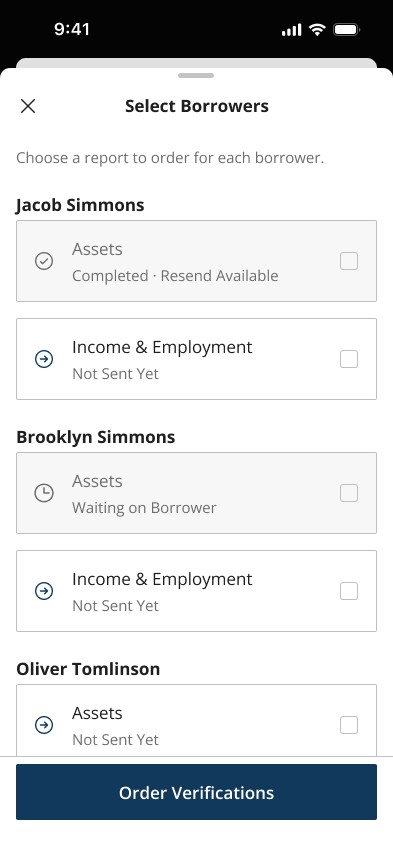
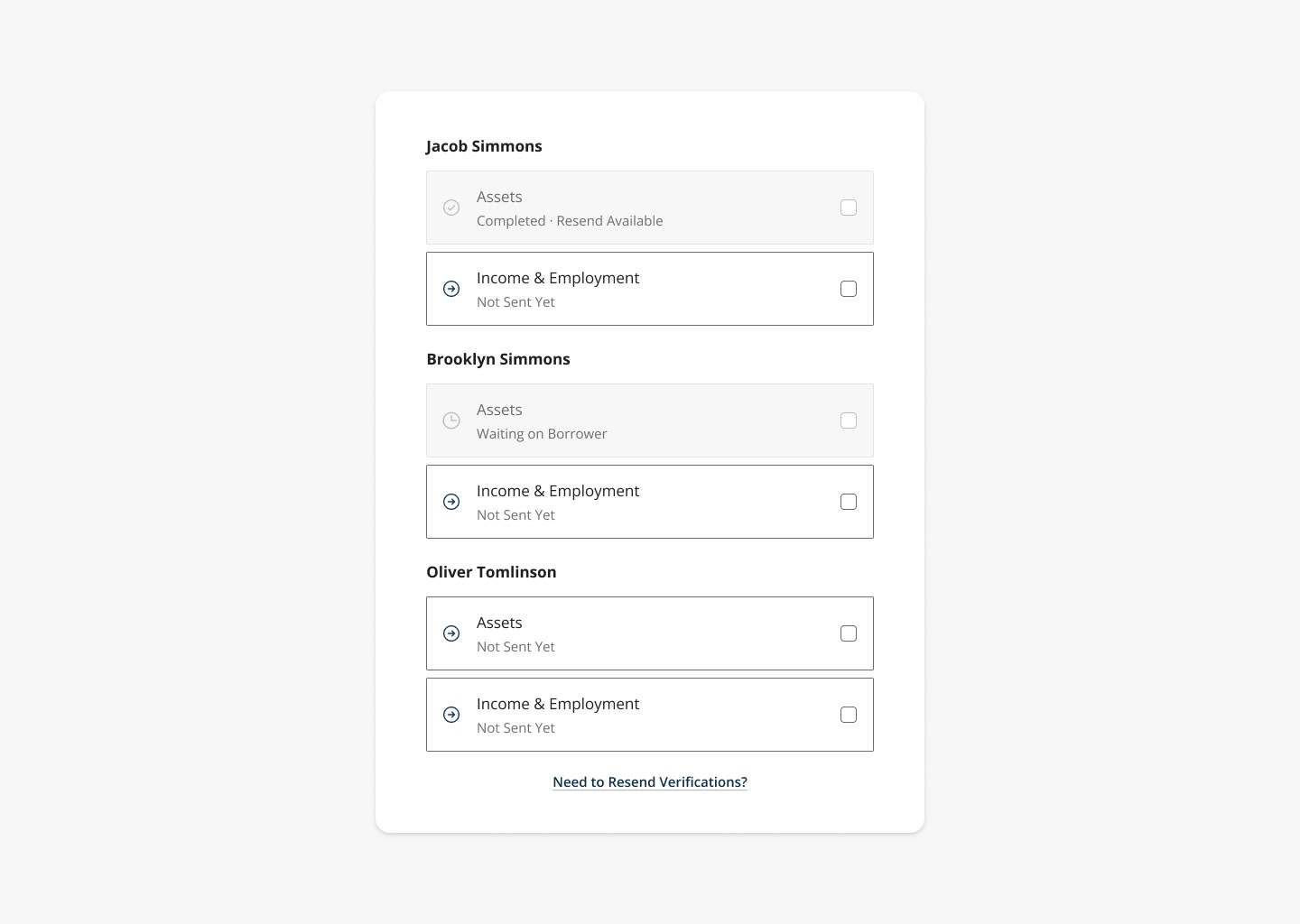
Loan Officers can order verifications à la carte. Choosing which borrowers to verify, which reports to run, and when. Allowing them to control verification spend without slowing underwriting.
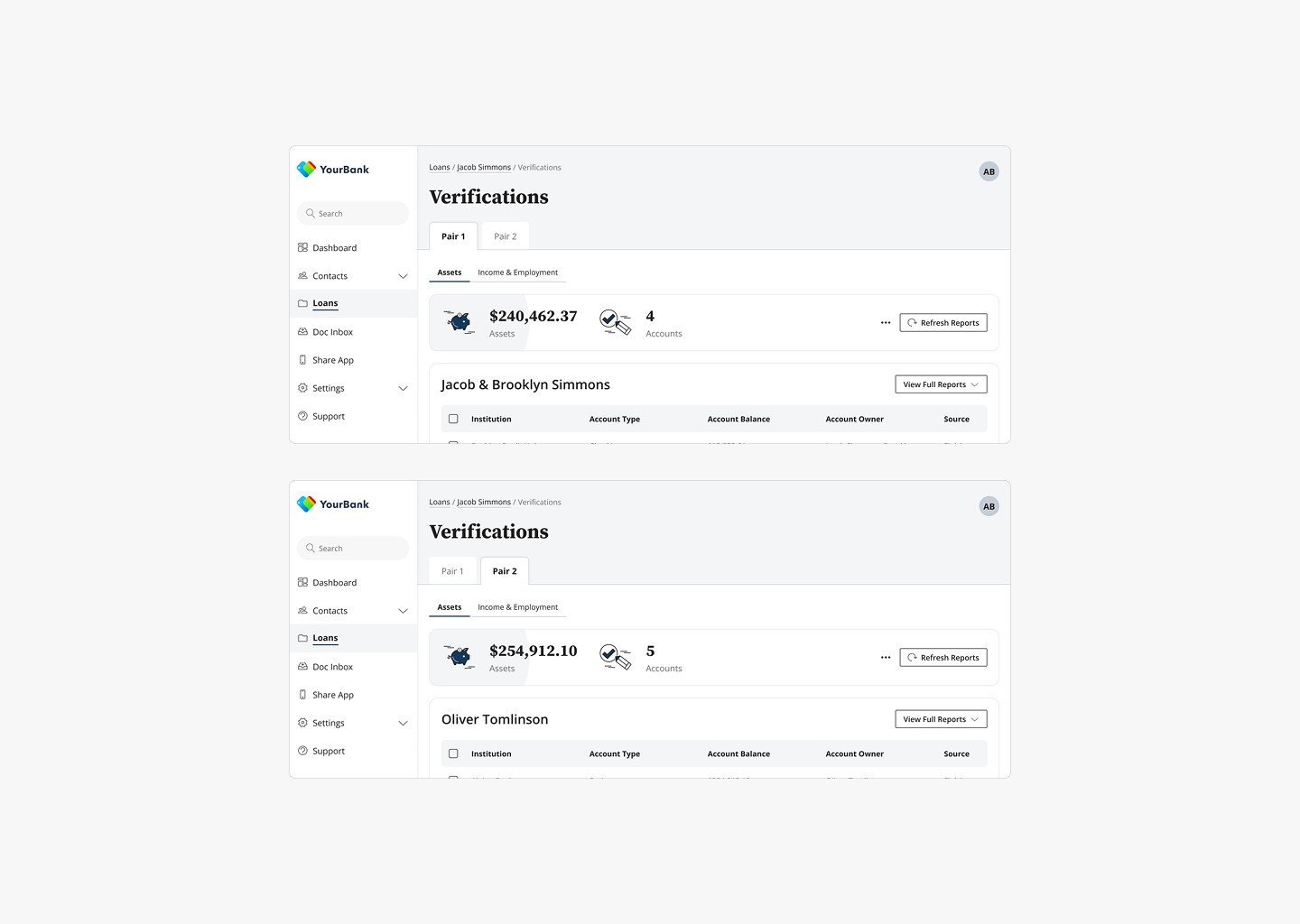
Evaluating verifications per borrower pair
Grouping borrowers by pair clarifies each borrower’s legal and underwriting role, helping Loan Officers determine which verification data should be included or excluded from underwriting calculations for a given scenario.
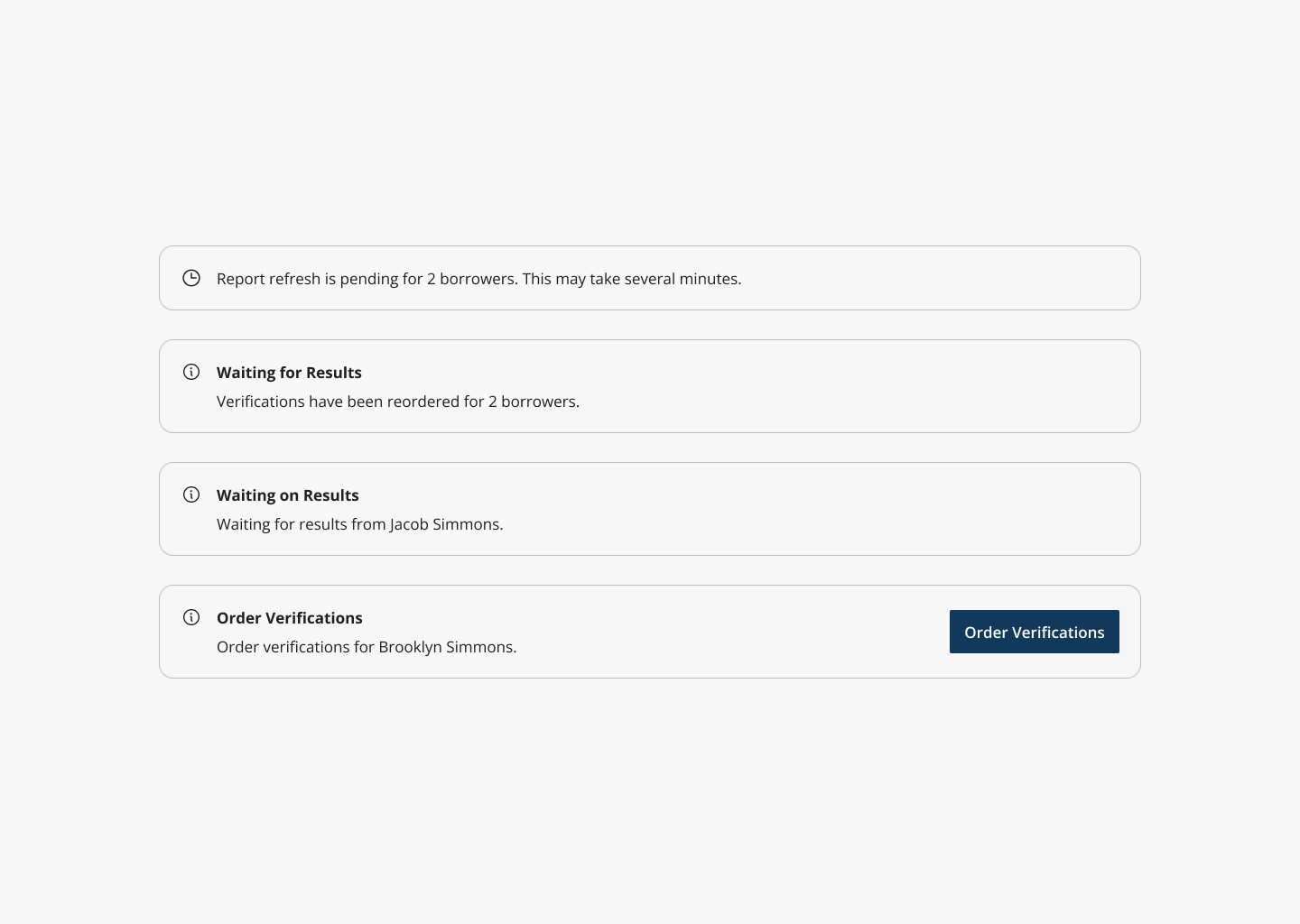
Communicate states clearly
Managing verifications across multiple borrowers introduces a wide range of states, including who has been invited, who has completed their verifications, where results are pending, and when re-ordering is required. Making these states clear and actionable for Loan Officers was critical to preventing underwriting delays and avoiding confusion.
OUTCOMES
Increased conversion rates through flexible vendor strategies
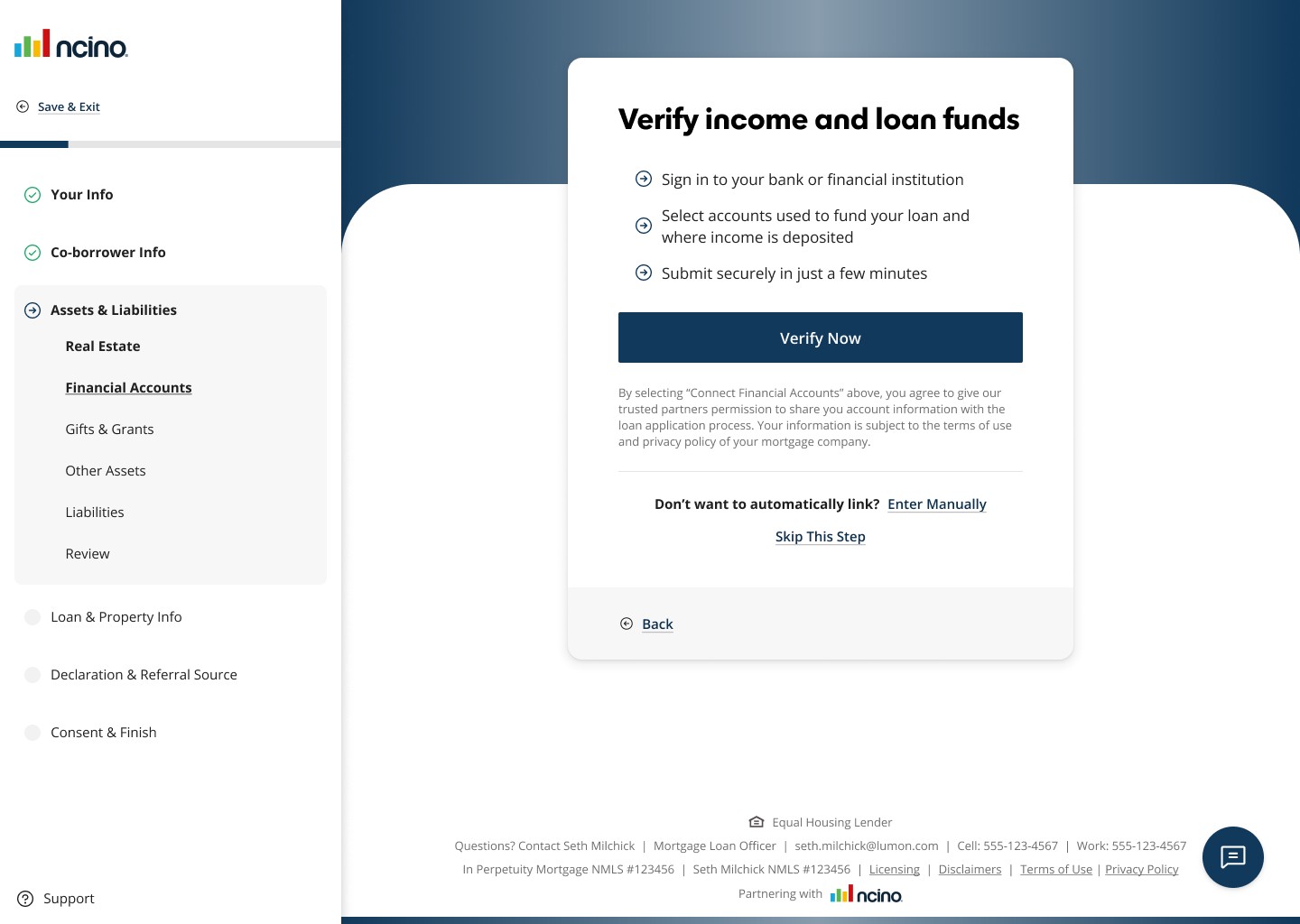
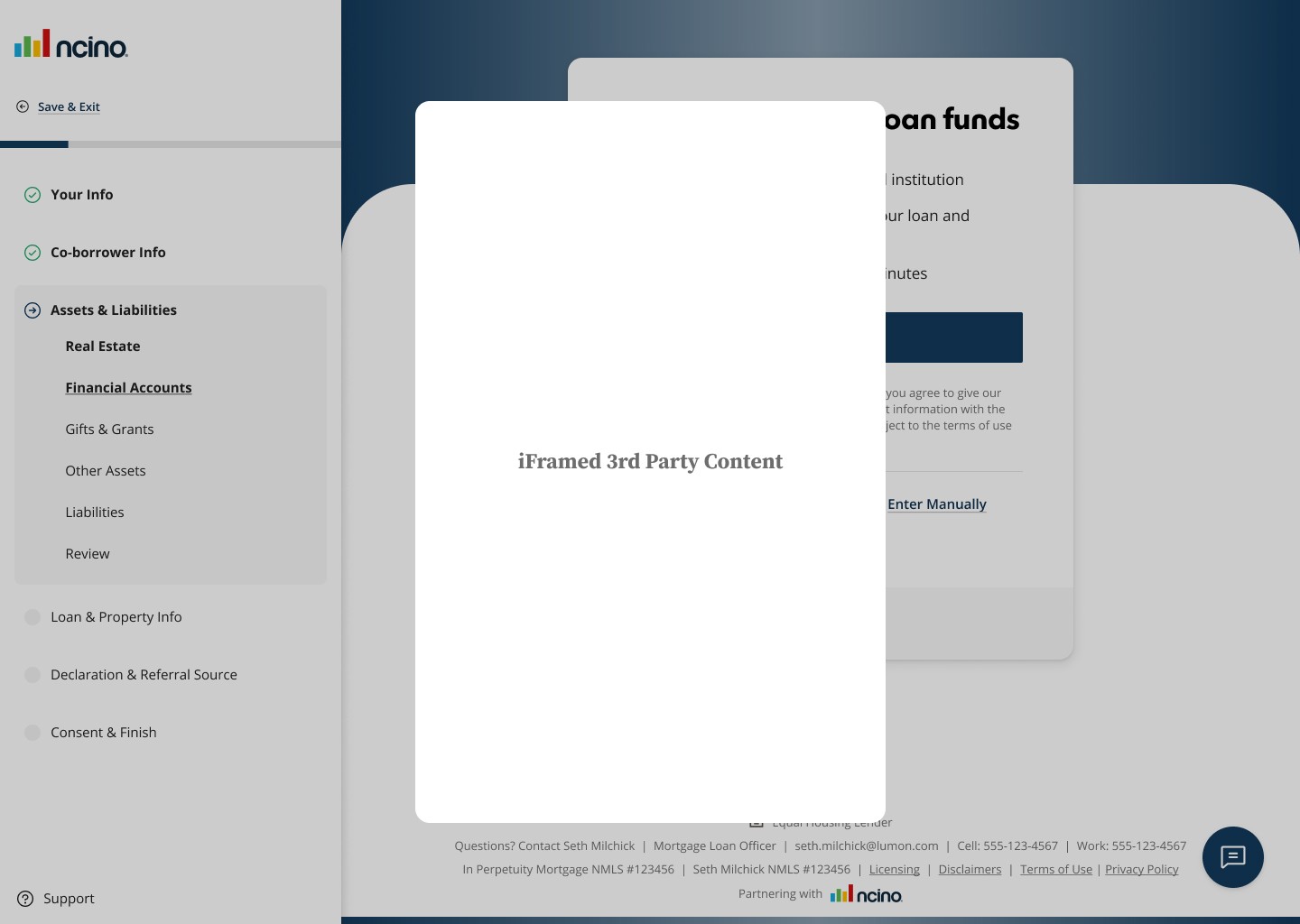
Increased verification conversion rates by enabling lenders to choose best-fit vendors for assets and employment. In one pilot, switching VOIE vendors led to a 7% increase in conversion rate, resulting in $47K in incremental profit-sharing revenue for nCino, with continued upside as volume scales.
Reduced verification waste and improved cost control in down markets
Gave lenders the ability to stage and scope verification spend based on loan readiness, reducing unnecessary verification costs. By allowing Loan Officers to order verifications à la carte, lenders could avoid paying for verifications on borrowers or scenarios unlikely to proceed, particularly in low-volume or high-fallout markets.
Expanded platform capability for modern borrower structures
Enabled lenders to confidently support complex borrower structures without workarounds or downstream risk. Multi-borrower workflows made it possible to verify, attribute, and evaluate assets and employment across multiple borrower pairs within a single loan, reducing operational friction and improving underwriting clarity for loans involving co-buyers, non-occupant co-borrowers, and family support.
